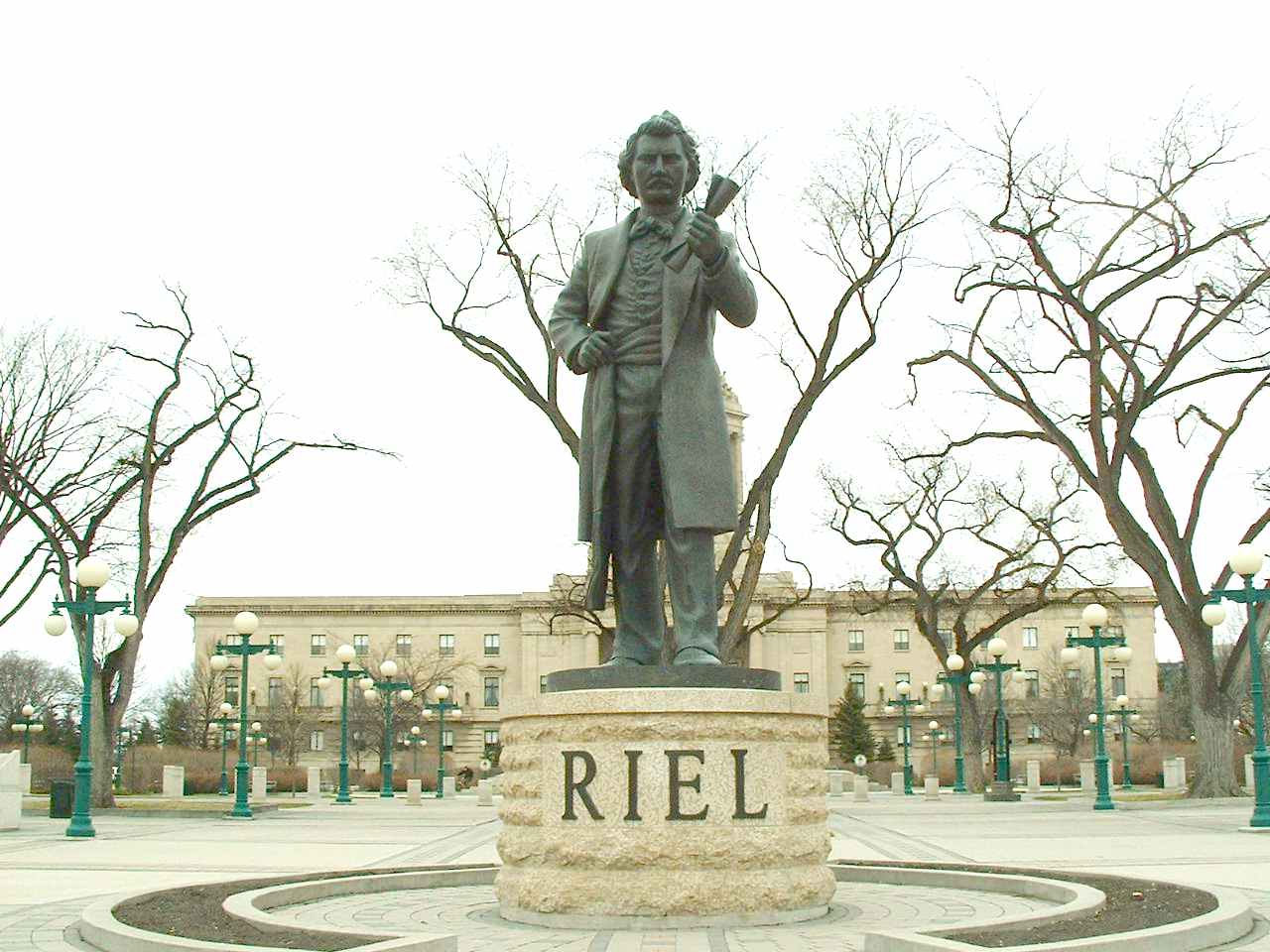
Louis Riel Day: Honouring Métis Leadership in Manitoba

Each February, Manitobans observe Louis Riel Day to honour the life and legacy of Louis Riel, a Métis leader who helped shape the province’s history. The day recognizes his leadership during the Red River Resistance and his role in negotiating Manitoba’s entry into Confederation in 1870.

For educators, Louis Riel Day offers an opportunity to centre Métis history, governance, and identity in meaningful ways. It invites learners to explore how Métis leadership influenced the formation of Manitoba and how those conversations continue to shape discussions about rights, belonging, and self-determination today.

Why Louis Riel Day Matters in the Classroom

Louis Riel remains a complex and significant historical figure. Some remember him as a political leader and the founder of Manitoba. Others view him through the lens of resistance and justice. Exploring these perspectives encourages critical thinking and helps learners understand how history reflects power, voice, and interpretation.

Louis Riel Day also provides an opportunity to learn about the broader history of the Métis Nation. Educators can use this time to highlight Métis culture, governance, language, and contributions to Canadian history. When learners engage with Métis perspectives directly, they gain a deeper understanding of Manitoba’s foundations and Indigenous leadership across the country.

Supporting Meaningful Learning About Louis Riel and Métis History

To support classroom learning, we have curated a collection of free, classroom-ready resources that centre Louis Riel and Métis voices. These resources help educators:

  • Introduce Louis Riel’s role in Manitoba’s entry into Confederation
  • Explore Métis governance and community leadership
  • Examine primary and secondary sources
  • Encourage reflection on identity, resistance, and reconciliation
  • Connect historical events to present-day conversations about Indigenous rights

Whether you teach in Manitoba or elsewhere in Canada, these resources provide accessible entry points for engaging learners with Métis history in thoughtful and respectful ways.

Classroom Resources for Louis Riel Day

  • Who are the Métis? People, Land, and Culture (Resource Kit) – This resource kit introduces learners in grades 4-5 to key aspects of Métis identity, including language, land, symbols, and important figures. Students will create story cards to represent what they’ve learned and use them to design a scene that shares their understanding of Métis culture.
  • Louis Riel, the Red River Resistance, and Beyond (Resource Kit) – Designed for older learners (grades 6–12), this resource kit includes extension activities that deepen understanding of Métis identity, Louis Riel’s leadership, and the Red River Resistance. Through critical reflection and discussion, students examine how these historical events relate to contemporary Métis experiences.
  • Rupertsland Institute – Métis Week Resources – Find Métis-developed learning materials, printables, and activities for various grade levels from the Métis Centre of Excellence.
  • Manitoba Métis Federation — Explore community events, commemorations, and activities taking place across Manitoba.

Continuing the Conversation

Louis Riel Day is an opportunity to reflect on Métis leadership, self-determination, and the shaping of Manitoba. By engaging learners with Métis history and perspectives, educators help foster deeper understanding, critical thinking, and respect for Indigenous governance and nationhood.

We encourage you to explore the resources and bring these conversations into your classroom.

Image: https://upload.wikimedia.org/wikipedia/commons/c/c4/Louis_Riel_Statue.jpg

“Louis Riel Statue” is licensed under CC BY-SA 3.0.

Storytelling in the Classroom: More than Just Words

campfire in the mountains

Stories are one of the most important ways people connect to and explain the world around them. Saskatchewan has declared February as Indigenous Storytelling Month, and National Storytelling Week will be celebrated nationwide from January 30 to February 6, 2024. 

Indigenous Peoples have a strong tradition of sharing knowledge from one generation to another through storytelling. Traditional stories can communicate many different types of knowledge and practices, varying from the sacred to the historical. Many stories are filled with humour and told because they are entertaining. Others may focus on transferring social, political, and cultural knowledge. When Elders and Knowledge Keepers tell stories about the first time they went hunting or fishing, their stories include lessons and teachings. These teachings may transfer knowledge of safety practices or share the location of particularly abundant berry patches and hunting trails on their traditional lands.

One of the best ways to honour Indigenous Storytelling Month is to highlight Indigenous voices by bringing Indigenous stories into your classroom. There are a few different ways you can do this! The first is to invite an Elder or Knowledge Keeper to your classroom to share a story with your students. Ideally, spend some time with the Elder beforehand and find out what story they might want to share. This will help ensure you’re ready to support your students as they listen to the story. Having Elders share their time and knowledge is a gift, so remember to thank them appropriately using local protocol practices. If you’re not sure what the proper protocol might be, ask someone who knows!

If it’s not possible to bring an Elder into your classroom, consider looking for an online resource from an Indigenous storyteller, like a video or collection of stories. If you bring in an external resource from an Elder or storyteller you do not know personally, make sure you learn as much as you can about that individual. Which Nation are they from? What type of story are they telling? It’s important students know who the storyteller is and where they come from because each story has a specific cultural lens. Understanding this cultural lens helps students understand the story within its context. Once you share a story, you can encourage students to discuss what happened in the story and to reflect on the lessons the story might contain.

Storytelling is a powerful teaching tool because it helps students connect to, relate to, or see the world from someone else’s perspective. When students learn through storytelling, they can relate their own experiences to the story, which helps them foster a more personal connection to the content. As students hear more stories, they are more likely to draw connections between the things they hear, making topics the unfamiliar feel more familiar. The best stories are rooted in real-world context and experiences. As students hear more stories, they have more ways of understanding and connecting to the world around them. Ultimately, learning through stories helps preserve cultural identity, foster community, and strengthen students’ identities.

Try these other methods of bringing story-based learning into your classroom:

1. Share Your Own Experiences

Consider sharing your own experiences of learning and discovery. Students may be able to relate to your experiences and thought processes, helping them better understand the topic at hand. 

2. Introduce New Topics Through Storytelling

Storytelling is a particularly effective way to introduce a new topic because it can act as an icebreaker. Learning through stories helps students apply knowledge and skills to real-life settings, facilitating better retention and transfer of learning. Learners may think they have no connection to a topic because they’ve never had direct experience with the material. However, stories can elicit emotional responses and give the material more context and significance. There might be a part of the story students can relate to, even if the topic you’re introducing is new.

3. Create a Character

Characters are ways to hook your students in and keep them engaged. Maybe you’re looking for ways to help learners understand the water cycle. Rather than simply describing the processes of evaporation, condensation, and rainfall, consider making water a character. Then, describe their journey from the sea and back again. This character could also talk about what happens to the water cycle when there are environmental changes or when pollutants enter the water system. 

4. Organize a Storytelling Day

Stories are meant to be shared with others. Consider organizing a storytelling day with your students to help them build their oral storytelling skills. We often have students write down their stories without sharing them or reading them aloud to one another. If they get read aloud, they’re read verbatim; the written copy is considered the ideal version. However, anyone who has told an amusing anecdote multiple times knows this isn’t how orally transmitted stories work. As we tell and retell stories, it’s common to add or remove details based on our audience or to adjust phrasing or emphasis to heighten the impact. The message or core stays the same, but we dress it up differently depending on who we tell the story to.  

 Here are some steps to organize your own Storytelling Day:

  • Encourage your students to think of something they want to tell a story about. This could be a life lesson, principle, or value they want to teach others, a difficult concept they want to explain, a historical event, or something funny they experienced. Students can brainstorm and outline their stories on paper, but encourage them to only write down the most important details.
  • Introduce some features of good oral storytelling to your students, like understanding their audience, thinking about the story’s goal, and using body language. 
  • Have your students practice telling their stories in small groups, and encourage them to be engaged in their peers’ stories! Encourage your students to ask each other questions about the story they just heard. Learning what their fellow classmates are curious about might give the storyteller more ideas for what they want to include. 
  • Include a culminating event where each student shares their story with the entire class or an audience of students from a different class!

Additional Resources

Check out these resources for more ways to honour Indigenous Storytelling Month and bring storytelling into your classroom.

Library Services for Saskatchewan Aboriginal Peoples (LSSAP)

The LSSAP committee organizes in-person and online events to celebrate Indigenous Storytelling Month. Check out their website to stay up-to-date on their offerings. 

National Centre for Collaboration in Indigenous Education (NCCIE)

NCCIE highlights innovative examples of Indigenous education from across the country, celebrating the dedicated work of communities to strengthen Indigenous education for all generations. They have a variety of lessons and resources you can use in your classroom.

Respecting and Honouring Treaty Relationships

Sleeping giant mountain.

In 2016, the province of Ontario passed legislation to declare the first full week of November as Treaties Recognition Week. This year, Treaties Recognition Week is November 5-11, 2023. So, what is a Treaty, and why is it important to recognize and acknowledge them? 

Treaties are legally binding agreements that set out the rights, responsibilities, and relationships of First Nations and the Federal and Provincial Governments. Treaties with Indigenous people include:

  • historic treaties with First Nations (70 historic treaties in Canada were signed between 1701 and 1923), and
  • modern treaties (also called land claim agreements)

Indigenous Nations have long used treaty relationships to protect their traditional lands, resources, and ways of life while maintaining peace and friendship with other Nations. These treaties are considered sacred, spiritual pacts.

As an educator, how can you help learners understand treaty relationships? How can we all demonstrate our commitment to the spirit and intent of the treaties? Let’s learn about treaties across Turtle Island from Elders and Knowledge Keepers. As you do, reflect on your learning and consider what you can do to demonstrate your commitment to respecting and honouring treaty rights, responsibilities, and relationships.

Read on to consider your role and some of the resources available to support you in your journey.

Whose Land?

“Treaty is forever. It cannot come strictly from a monetary thing, it’s got to come from what you are as a people, the land was given to us, so I believe it’s a gift from the Creator, you have a responsibility to look after it. The needs are different than what they were back then, the needs are different, so therefore you have to move along with the time to be able to look after the needs that you have.”

– Bentley Cheechoo, originally a member of Moose Cree First Nation and also a former Chief of Constance Lake First Nation and Grand Chief (Indigenous Voices on Treaties).

One of the main effects of the historic treaties signed between 1701 and 1923 was the creation of reserves. After signing treaties, many Indigenous Nations found themselves restricted to small parts of their traditional and rightful territories and large sections of their lands were given to European settlers.

The colonial and Canadian governments used treaties to secure land so they would have access to valuable natural resources and the ability to build industry across the country. Many Nations signed treaties with the understanding that their land would be accessed and used by settlers in exchange for goods and annual financial compensation, not that they were signing away the title. To Indigenous people, land is not a commodity to be owned, and therefore, it could not be signed away.

Everyone in Canada lives on Indigenous lands. Whose land do you live on? Visit the Whose Land digital map as a class. Turn on the Treaties & Agreements filter to learn about different treaty territories across Canada. Have learners work in groups to research local treaties in various parts of Canada using the site and encourage discussions about ceded and unceded land and historic and modern treaties.

Treaties and Truth and Reconciliation

Treaties Recognition Week was established in response to the Truth and Reconciliation Commission’s Calls to Action. Respecting and honouring treaty relationships is an important part of truth and reconciliation. In his interview for Indigenous Voices on Treaties, former Ontario Human Rights Commissioner and citizen of the Mississaugas of Alderville First Nation Maurice Switzer, Bnesi, shares his beliefs about how reconciliation can happen in Canada:

“For me, when we talk about truth and reconciliation, we’re really talking about the original spirit and intent of treaties. And to me, we will know when reconciliation is starting to happen in Canada when people of all different backgrounds and creeds and languages and colours are living in mutual respect because that was the relationship that was envisaged a couple of hundred years ago when the treaty process started.”

Treaties have no expiration date. As long as the sun shines, the grass grows, and the river flows, treaties are meant to endure. While some people talk about treaties as being “ancient” or irrelevant to their lives today, the truth is these documents are legally binding.

The Role Treaties Play in Our Lives 

Many people may think of treaty rights as “special” Indigenous rights; however, all people living in Canada are treaty people with their own set of rights and responsibilities.

“Some people make an assumption that only Indigenous people are treaty holders, when in actuality, it’s the entire community is a treaty holder, Indigenous, non-Indigenous community members are all part of the treaty, and so the importance of learning about the treaty is because it governs part of our relationship together.”

– Cora-Lee McGuire-Cyrette, Chief Executive Officer of the Ontario Native Women’s Association (Indigenous Voices on Treaties)

In treaty negotiations, one of the main principles is finding a good balance between what Indigenous peoples want for their governments and what people who aren’t from First Nations would like. We are all treaty people. Let’s work together towards a sustainable future for all of us.

How Can I Participate during Treaties Recognition Week and Beyond?

These are just a few meaningful ways to engage with available resources, in-person and virtually. 

1. Attend Local Events and Workshops

Here is a list of Treaties Recognition Week events in Ontario. Find a workshop near you, or try a virtual event!

2. Dive into Educational Resources

Read books, watch documentaries, and browse online resources about the history and significance of treaties in Canada. Here are a few suggestions to start: 

📚Whose Land Is It Anyway? A Manual for Decolonization is a free eBook by Peter McFarlane and Nicole Schabus. 

🎙️Dr. Pamela Palmater, a Mi’kmaq lawyer, professor, activist, and politician from Mi’kma’ki, New Brunswick, hosts the Reconciliation Book Club on YouTube. You may wish to use the episode “Reconciliation Book Club – Whose Land Is It Anyway?” as a companion for your learning.

📽️Trick or Treaty? by Alanis Obomsawin. Watch the full documentary on the National Film Board of Canada website.

💻Treaties and Worldview, a high school resource kit that helps learners understand how the differing worldviews of settler Canadians and Indigenous Peoples during the negotiations of the Numbered Treaties may have impacted each party’s understanding of the final agreement.

3. Advocate for Meaningful Change

Advocate for policies and initiatives that promote truth, reconciliation, and the rights of Indigenous peoples. Visit Idle No More and LANDBACK to learn how these movements resist unfair treaty terms and honour Indigenous sovereignty. 

What are you planning for Treaties Recognition Week in your classroom? We’d love to hear your ideas!


References

Preparing for Orange Shirt Day

Every Child Matters rock

Educators can prepare for this important topic right from the beginning of the year!

While our learners may still be enjoying their summer vacation, many educators begin thinking about the beginning of the school year well before their holidays have ended. There are many things to consider as we welcome learners back to school. Something we should not overlook is September 30, or Orange Shirt Day and National Truth and Reconciliation Day. Are you wondering how you can discuss such a heavy topic with learners you are just getting to know at the beginning of the year? Keep reading for some ideas on how to successfully build classroom community to meaningfully observe Orange Shirt Day this fall. 

Remember what Orange Shirt Day is all about

Most people have some basic knowledge about Orange Shirt Day. Orange Shirt Day grew out of the St Joseph Mission residential school Commemoration Project and Reunion in May 2013. Phyllis Webstad told the story of her new shiny orange shirt, a gift from her grandmother, being taken away at just six years old when attending residential school. This story inspired Orange Shirt Day and is still told to learners across Turtle Island each year. September 30 is a way for Canadians to discuss the effects of residential schools and their legacy, let survivors know they matter, and build bridges toward reconciliation.

If we think about these messages in our classrooms, there are some fundamental elements we can address at any time throughout the year. How can we show our learners they matter? Learn about them! Finding out what your learners enjoy and what makes them feel safe is a great way to start. Spend time getting to know your classroom community and the community at large. When you establish classroom expectations, co-create them with learners. These expectations should explain what values and behaviours represent respect and empathy. A positive classroom environment is crucial for learning and for entering into any discussion about the treatment of Indigenous Peoples in Canada and reconciliation. 

Build community

Educators know how to create bonds with their learners; it is a cornerstone of good practice. While you may already have some strategies, you may also want to consider additional ways to bring Indigenous perspectives into your community-building efforts. Roger Simon (2005, p. 88, as cited in Wallace-Casey, 2022), a scholar who focuses on remembrance learning, asks, “What might it mean to live our lives as if the lives of others truly mattered?” As we build bonds with our new learners, we want to ensure we include activities that try to answer Roger Simon’s question. Taking the time to ensure our learners know what respect and empathy look like also means allowing them to practice these skills with one another and their community. 

Getting to know your local Indigenous community or communities is a great way to encourage learners to begin creating connections. Try finding out whose land you and your learners are occupying by visiting Native Land Digital. Your local Friendship Centre can help you make connections with Indigenous community members if you do not have existing relationships. These actions can be part of the “getting to know you” activities you do with learners.

Find the right resources

This may seem like the most daunting part of commemorating Orange Shirt Day – but it does not have to be! Many educators and organizations have taken the time to carefully and thoughtfully construct resources that support learning about Orange Shirt Day. Here are some tips about what to look for:

  • Resources that are age-appropriate for your learners. Different ages need different ways of accessing information about residential schools and survivors.
  • Resources that encourage historical thinking, specifically those that help learners develop historical perspectives and do research. We want learners to know how to investigate the past for themselves and when to use these skills in the future. The concept of historical thinking comes from Seixas and Morton’s work on developing a framework that enables learners to think like historians and begin constructing their own narratives about the past. By encouraging historical thinking, we are making space for Indigenous narratives about history and its connection to the present. 
  • Most importantly, find resources that make room for Indigenous worldviews and dialogic learning. 

Finding a single resource that does each of these things can be difficult! You may want to choose one and then emphasize elements that are missing by using another resource to supplement. To help you get started, here are a few recourse suggestions:

This free downloadable resource kit introduces learners to Orange Shirt Day and Phyllis Webstad’s story. Learners then engage in historical thinking and research to learn more about residential schools and survivors. The resource kit offers unique ways for learners to demonstrate their knowledge, such as word art, social media posts, and poems or songs to be shared with the community.

If your learners are familiar with the residential school system, then you may want to extend their learning using this kit. This free downloadable resource kit positions the story of Chanie Wenjack as told in Gord Downie’s Secret Path multimedia project as an opportunity to explore the topic of Indigenous languages and how they relate to Indigenous rights on a local/regional/national/global scale. 

Project of Heart is an inquiry-based, intergenerational and artistic journey that seeks the truth about the history of Indigenous peoples in Canada. Learners complete a series of activities, including decorating wood tiles and creating a display in the school, that teaches about residential schools and their long-lasting effects on Indigenous communities.

  • Orangeshirtday.org (K-7) 

This website contains a lot of information about Orange Shirt Day and is an excellent resource for educators. These resources include videos, books, and activities that are age appropriate and sensitive to both Indigenous Peoples and young learners. The activities encourage learners to use historical thinking skills and develop empathy.

How will you be commemorating Orange Shirt Day with your learners this fall? We’d love to hear from you, reach us here!


References

Wallace-Casey, C. (2022). Teaching and learning the legacy of residential schools for remembering and reconciliation in Canada. History Education Research Journal.

Celebrate National Indigenous Peoples Day

Hoop Dance Celebrate National Indigenous Peoples Day

June is National Indigenous History Month, and on June 21, we celebrate National Indigenous Peoples Day. We know the end of the school year can get a little hectic. However, we should not skip celebrating important topics, especially ones that provide great learning opportunities. How can you make the most of these celebrations with your learners? Keep reading to learn more about resources, events, activities, and ideas to observe National Indigenous History Month and National Indigenous Peoples Day.

National Indigenous History Month

National Indigenous History Month officially began with a unanimous motion in Canada’s House of Commons in 2009. However, Indigenous activists laid the foundation for a day of recognition in the 1980s. Each June, we celebrate Indigenous Peoples’ accomplishments and diverse histories across Turtle Island.

Learning about the history of Indigenous Peoples in Canada is an essential part of reconciliation. All Canadians, Indigenous and non-Indigenous, should have the opportunity to learn about this history. Try getting involved in local events throughout the month. There will be many happening on June 21, National Indigenous Peoples Day.

Resources for Learning About Indigenous Histories

One way to learn about Indigenous histories and cultures is to read books by Indigenous authors. The First Nations Education Steering Committee has an excellent list of resources for K-9 and 10-12 and adult learning. Each book on the list is annotated and identified by grade level and Nation. There are many excellent resources here. The only challenge will be choosing between them!

As the school year winds down, it can be a great time to take a field trip. Check out your local library or nearby museums. There may be events or exhibits you can visit. If you are in the Gatineau area, consider visiting the First Peoples Hall at the Canadian Museum of History. The exhibit features over 2,000 historical and contemporary objects. It leaves you with a deeper understanding of Indigenous Peoples and their histories and contributions to society. Can’t make it to the museum? They also have educator resources to help bring the museum to you! Resources include virtual presentations, online modules, history boxes, virtual exhibits, and suggested activities. 

If you are looking for lesson plans with curriculum-aligned Indigenous content, try Lessons from the Earth and Beyond by Isaac Murdoch. These resources offer inquiry-based activities for different age ranges, including recordings in Anishinaabe! 

Connect With Local Communities

Of course, the most impactful way to learn about Indigenous Peoples is to meet and connect with local Indigenous communities! If you’re unsure how to start, try contacting your local Friendship Centre. They should be able to point you in the right direction and help you navigate the appropriate Cultural Protocols. Invite an Elder or Knowledge Keeper to your classroom. Elders and Knowledge Keepers have valuable knowledge to share through traditional stories, language teaching, crafts, or land-based activities. 

National Indigenous Peoples Day

National Indigenous Peoples Day is June 21 because it marks the beginning of the summer solstice. Indigenous Peoples worldwide have been celebrating the summer solstice for thousands of years. June 21 is the longest day and shortest night of the year. It is a time associated with gathering. Indigenous communities observe this holiday across Canada. If you are in the Yukon or the Northwest Territories, June 21 is an official holiday. 

How can you celebrate National Indigenous Peoples Day?

Join a Local Celebration

Many celebrations across the country will mark this day. Getting involved is probably the best way to observe National Indigenous Peoples Day. Here are a few highlights of what is happening in each province and territory.

Yukon

Suppose you are fortunate enough to be in the Yukon. In that case, there are artist demonstrations, ceremonies, concerts, traditional food offerings, and more. 

British Columbia

The Squamish Lil’wat Cultural Centre in Whistler, British Columbia, has a weeklong National Indigenous Peoples Day celebration. June 21 marks the opening of the Ancient Wellness Exhibition. There will also be performances, feasts, live canoe carving, an artist market, and many other activities. 

Northwest Territories

Celebrations will be taking place throughout the Northwest Territories. Suppose you can make it to the land of the midnight sun. In that case, Inuvik has a few things planned, including drumming, traditional food, a 5K or 10K run, and sunlit skies in the middle of the night.  

Nunavut

Iqaluit, Nunavut, plans to honour Inuit land on June 21. You can stay up-to-date on the city’s website.

Alberta

Calgary, Alberta, is hosting an Aboriginal Awareness Week from June 20-25. It includes an Indigenous Showcase Variety Show, a hand games tournament, and a Powwow. Admission to most of the events is free, and everyone is welcome!

Saskatchewan

You can follow the Regina National Indigenous Peoples Day page on Facebook to stay updated about celebrations if you are in this area of Saskatchewan.

Manitoba

Aboriginal Peoples Television Network (APTN) will host the first in-person celebrations since 2019 at The Forks in Winnipeg, Manitoba. The event is free and open to the public. It includes a long list of Indigenous performers on the roster. APTN will also broadcast the event for those who cannot attend in person.

Ontario

You can attend various events throughout Ontario, including the Summer Solstice Indigenous Festival in the Ottawa region or the Nogojiwanong Indigenous Fringe Festival in Peterborough.

Quebec

At Place Jean-Béliveau in Quebec City, Quebec, you can attend KWE! Meet with Indigenous Peoples. This free event celebrates Indigenous Peoples’ cultures, traditions, and contemporary lives.

New Brunswick

The Sitansisk Pow Wow will take place in Fredericton, New Brunswick. Join the two-day event and listen as the Wolastoqiyik People share their culture through music, dance, and traditional ceremonies.

Prince Edward Island

In Charlottetown, PEI, you can expect a celebration at Confederation Landing hosted by the Native Council. There will be a free BBQ, cultural events, guest speakers, youth games, and more!

Nova Scotia

Juno award-winning DJ SHUB, the Godfather of Pow Wow Step, will be in Halifax, Nova Scotia, offering a free concert to bring in the summer solstice.

Newfoundland and Labrador

Those of us in Newfoundland and Labrador can celebrate National Indigenous Peoples Day by visiting the Beothuk Interpretation Centre. You can also search for events happening in your region.

This list is far from complete. Many celebrations occur from coast to coast. If you want something local, check out events posted in your community. Contact your local Friendship Centre to find out how you can participate in celebrating National Indigenous Peoples Day.

Do you know how you will celebrate National Indigenous History Month and National Indigenous Peoples Day? Will you be observing with your learners, family, or both? We would love to hear from you!

Your Role in the International Decade of Indigenous Languages

Four people walking in a field of high grass

Following the success of the International Year of Indigenous Languages in 2019, the United Nations, and the over 50 member countries, believed they needed to do more for Indigenous languages and Indigenous human rights. The result was the Los Pinos Declaration in 2020, which announced 2022-2032 as the International Decade of Indigenous Languages. What does that mean for Indigenous and non-Indigenous people in Canada, and how can you get involved? Keep reading to find out!

What are the goals of the International Decade of Indigenous Languages? 

In an interview with CBC, Chief Leroy Denny of Eskasoni First Nation, the largest Mi’kmaw-speaking community in the world, said, “If an elder passes away, it’s like a library burns down, I was told.” Language is closely linked to identity, traditional knowledge, worldview, and ways of being. Each language is like a distinct universe. Unfortunately, many Indigenous languages are at risk of extinction. The loss of these languages results in a significant loss of human rights. Language loss restricts freedom of expression, access to services, and participation in cultural life, among many other rights. 

Protecting Indigenous languages is paramount to upholding Indigenous human rights. It also guarantees the success of all people in the future. The Global Action Plan for the International Decade of Indigenous Languages aims to ensure “Indigenous languages are preserved, revitalized, promoted and used across all socio-cultural, economic, environmental, and political domains and are drivers for building peace, justice, development and reconciliation in our societies.”

The Decade for Indigenous Languages is an opportunity to support Indigenous Peoples as they strengthen their languages. It is also an opportunity to find new ways to work together for a more inclusive future. Making sure Indigenous languages survive is an endeavour that requires respectful relationships and genuine partnerships between Indigenous and non-Indigenous Peoples. 

What about Indigenous languages in Canada?

You may (or may not) be shocked to learn that over 260,550 people reported being able to speak an Indigenous language in Canada’s last census. Indigenous People in Canada speak over 70 languages from 12 distinct language families. A Canadian Language Museum publication, Indigenous Languages in Canada, includes a map of Indigenous language families in Canada.

Many Indigenous languages across Canada are undergoing revitalization. The number of speakers is greater than the number of people whose first language is an Indigenous language. That means more people are reawakening their language through second language learning.

What is happening in Canada to support Indigenous languages?

Several things are happening throughout the country to support the continued use of Indigenous languages. Provincial governments are finding different ways to take action. In Nova Scotia, the Mi’kmaw Language Act will enshrine Mi’kmaw as the official first language with the promise of a multi-year revitalization strategy. The Canadian government enacted the Indigenous Languages Act in response to the International Decade of Indigenous Languages. This act aims to provide long-term funding for Indigenous languages and a commissioner, Dr. Ronald Ignace, to oversee its implementation. 

Many Nations did not wait for the Canadian government or UN to begin their language reclamation and revitalization efforts. Meanwhile, others are just embarking on this journey. Indigenous language speakers’ efforts include creating language nests, developing language and culture curriculums, and building resources to support these curricula. Haisla Nation is a shining example of what language reawakening projects can look like. Part of Haisla Nation’s language revitalization includes partnering with the First Nations Education Foundation to lead rapid word collection activities and rapid story collection workshops as the foundation for language development. The Nation has a project to build K-12 language and culture curricula for their and nearby public schools.

For years, the First Nations Education Steering Committee (FNESC) has assisted communities in their language revitalization efforts. The governments of Canada and British Columbia undertook a recent initiative to develop accredited language programs. Following British Columbia’s language development template, First Nations in BC can create a language curriculum to replace French as a second language. 

What can I do to support the International Decade of Indigenous Languages?

How can you join the Decade of Indigenous Languages and beyond? Funding is available for individual Nations and schools to assist with developing and implementing Indigenous language projects. First Nations communities and organizations may access federal funding through the Department of Canadian Heritage. Regional funding is available through the First Peoples Cultural Council (FPCC), First Nations Confederacy of Cultural Education Centres (FNCCEC), and other regional and local groups. Assessing community needs, evaluating strengths, and identifying goals for growth is a great place to start initiating a language project.

At the individual level, we can encourage learners to use their language in our classrooms. Invite Indigenous language speakers to share their knowledge. Consider learning an Indigenous language yourself. Some of the funding available for Indigenous language reclamation and revitalization has resulted in many options for learning Indigenous languages, including a virtual reality game that teaches Blackfoot. You can also find an app for many languages and dialects, including Anishinaabe, Cree, and Inuktut! Learning an Indigenous language positively impacts you and your learners and is an important act of reconciliation.

How can you begin? A great first step is using Native Land Digital to learn whose ancestral territory you occupy. Then, try learning a basic greeting in the local language(s)! If you’re interested in learning an Indigenous language, you can also check out some of these language resources. 

How will you encourage learners to contribute to Indigenous language revitalization? Will you be, or are you already, learning an Indigenous language? We’d love to hear from you!

5 Resources To Address Truth and Reconciliation Week in your Classroom

Residential school victims shoes on Parliament Hill

With Truth and Reconciliation Week just around the corner, many educators begin to explore these complex topics with learners. Just as no two people are the same, there is no “one size fits all” approach to discussing truth and reconciliation. Each of us has a lens through which we perceive the world. Our family history, personal experiences, and culture shape this viewpoint. Below are five activities you can use to support learners beginning their journey to truth and reconciliation.  

Truth and Reconciliation in Literature

Use age-appropriate literature by Indigenous authors to approach truth and reconciliation with learners. 

This blog post shares ten books written by Indigenous authors, appropriate for Kindergarten to Grade 12. You may wish to use one of these books in your classroom as a discussion starter. Alternatively, the book you share could inspire an art project, creative writing activity, drama presentation, or social action initiative. 

Reconciliation Through Calls to Action

Watch this video with your learners: Truth and Reconciliation For Residential Schools.

It reviews the history of residential schools, the meaning of truth and reconciliation, and shares examples of communities looking to raise awareness about the TRC’s 94 Calls to Action.

After watching this video, consider asking learners to review the 94 Calls to Action and choose one that inspires them. Ask learners: What can individuals, schools, or communities do to honour this call to action? You may encourage learners to engage in a group discussion, create a short written reflection, or represent their thinking through art. 

Cultural Assimilation Policies

Discuss cultural assimilation with learners. Encourage them to write poems inspired by George Ella Lyon’s famous poem “Where I’m From.” 

This activity introduces learners to the concept of cultural assimilation. Using “Where I’m From” as a guide, encourage learners to reflect on their family and cultural history through poetry. Alternatively, you may wish to encourage learners to interview a residential school Survivor and write a poem from their perspective, with permission. This is an opportunity to discuss sensitivity and empathy with learners. 

Residential School Survivors

Encourage learners to use this activity to reflect on their perspectives about reconciliation: Your Thoughts about Reconciliation.

Learners will use their descriptive writing skills to reflect on the experiences of residential school Survivors. Alternatively, learners can reflect on their own experience learning about residential schools. They can use art, oral storytelling or drama to convey their message. 

Indigenous Languages

Discuss how the residential school system affected Indigenous languages in Canada and where many of these languages stand today. 

Learners have the opportunity to reflect on what they already know about Indigenous languages in Canada. They will identify what they would like to learn and assemble various facts to understand Indigenous languages. Consider challenging your learners to research beyond the information provided on the handout.

If you want to know more about events during Truth and Reconciliation Week or learn more about Truth and Reconciliation, check out our blog post, Truth and Reconciliation Week: Learning through Action.

Truth and Reconciliation Week: Learning Through Action

Residential School Memorial Ottawa

For some, truth and reconciliation means acknowledging and learning about the past. For others, the focus lies in honouring treaties. Reconciliation is complex, from letting go of stereotypes to reclaiming language and culture. It is a process. One that takes humility. One that requires action. Ultimately, reconciliation is the responsibility of all Canadians.

The Truth and Reconciliation Commission defines reconciliation as “establishing and maintaining a mutually respectful relationship between Aboriginal and non-Aboriginal peoples in this country. In order for that to happen, there has to be awareness of the past, an acknowledgement of the harm that has been inflicted, atonement for the causes, and action to change behaviour.”

Truth and Reconciliation Week

This year, the National Centre for Truth and Reconciliation is offering Truth and Reconciliation Week, a 5-day virtual program to engage participants in conversations about reconciliation, including treaties, land claims, and the residential school system. Between September 27 and October 1, educators and learners in grades 5–12 can join the conversation. Artistic and cultural performances by First Nations, Métis, and Inuit artists are available to learners. Additionally, discussions with Elders, Knowledge Keepers and residential school Survivors will guide the week. 

Supporting Reconciliation through Education

Recent discoveries of unmarked mass graves bring truths about the Missing Children to light. Many parents, educators, and community leaders are asking the difficult, necessary questions:

What can we do to support our young people in their journey towards reconciliation?

How can we honour the Truth and Reconciliation Commission’s 94 Calls to Action in a meaningful way?

How can we educate ourselves to feel adequately prepared to engage young people in the process of reconciliation?

For many, this is a daunting task of self-reflection and personal education. It is important to remember, however, that reconciliation is not linear. “Somewhere between action and reaction there is an interaction, and that’s where all the magic […] lies.” Robin Wall Kimmerer, an Indigenous author and scientist, summarizes this interaction by stating, “Action on behalf of life transforms. Because the relationship between self and the world is reciprocal. It is not a question of first getting enlightened or saved and then acting. As we work to heal the earth, the earth heals us” (2015, p. 404). 

Sharing the Wisdom of Elders and Knowledge Keepers

Here at Learning Bird, we have had the privilege of collaborating with over 55 schools in 52 communities across the area known as Canada. With the wisdom shared by Elders and Knowledge Keepers, these partnerships have created educational materials to inspire young people from coast to coast to coast. Below are a variety of resources to begin the journey to reconciliation and learning through action. You may wish to use these resources to support your own learning or teach in your classroom.

Trauma-Informed Teaching Practices

Reconciliation often comes with the resurgence of trauma. As we approach these topics with young people, inter-generational wounds can manifest in various ways. Creating a space where learners can learn about the topic, themselves, and their emotions can make a difference in how youth move forward through their journey of reconciliation. You may wish to learn more about trauma-informed practice and create a toolkit of strategies to support the young people in your care.  

As you engage and take action during Truth and Reconciliation Week, consider asking yourself:

What does reconciliation mean to me?

Interested in knowing more about how to address Truth and Reconciliation in your classroom? Here are 5 Ways to Address Truth and Reconciliation Week in your Classroom!

References